

05 Aug

How can we help you?
Search rituals, services, or donation campaigns
Trending:
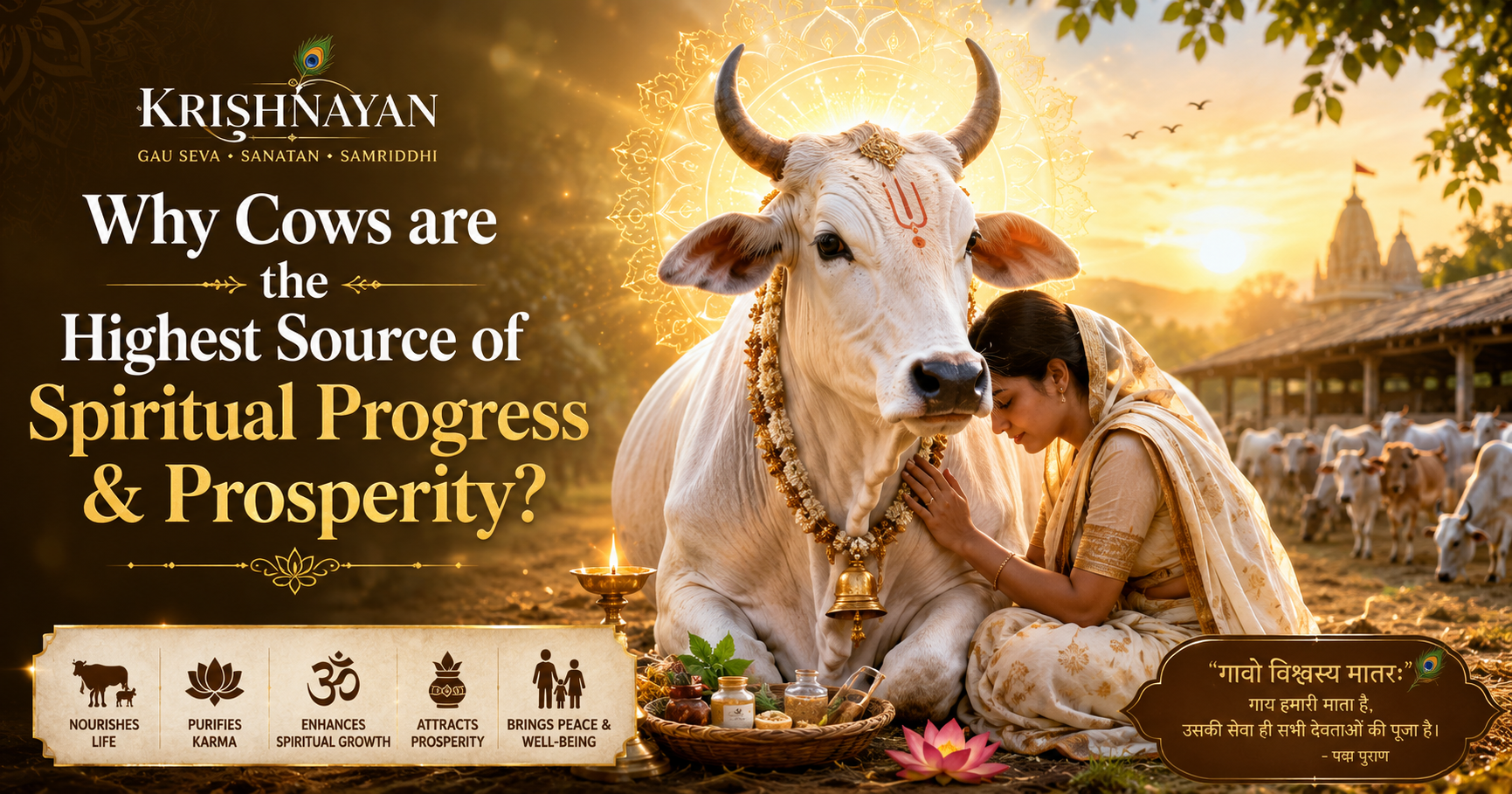
Why Cows Bring Spiritual Progress And Prosperity?
The Gaumata importance in Hinduismis not limited merely to material or economic benefits; it also serves as a vital medium for spiritual consciousness and the attainment of salvation. The cow was regarded not merely as a source of economic gain, but also as a means for spiritual advancement and the attainment of liberation. The cow was worshipped as Kamadhenu, believed to be the fulfiller of all desires. This was associated not merely with the fulfillment of material desires, but also with the realization of spiritual aspirationssuch as the desire for Moksha, knowledge and the attainment of the Divine. The cow was perceived as a force that liberates an individual from material bonds and guides them toward spiritual freedom.
The Spiritual Significance of Cow in Hinduism
In Hinduism, why do Hindus worship cows? It’s because the cow
holds global spiritual significance, as encapsulated in the aphorism Gavo
Vishwasya Matarah. It is a tradition to offer every oblation during a
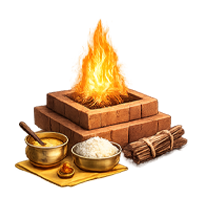
Yajnawhether to the Navagrahasor to deities such as Varuna, Vayu and others,
using cow's ghee. This practice endows the sun's rays with a unique energy. It
is this very energy that triggers rainfall and through this rain, food grains,
trees, plants and all other forms of vegetation receive the gift of life.
In Hinduism, cow's milk, dung, ghee and other
products are utilized in virtually every religious rite and sacramentsuch as
naming ceremonies, Garbhadhan and birth ceremonies. Furthermore, during
ceremonies such as weddings, the act of purification is traditionally performed
by applying a paste of cow dung. The ritual of Godanis also accorded immense
significance during the time of marriage. A religious rationale underlying this
practice is the belief that Goddess Lakshmi resides within cow dung, while
Goddess Ganga resides within cow urine.
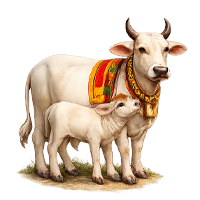
The custom of Godanto facilitate the crossing of the Vaitarani River still prevails in our society today. Cow's milk Kheer is also utilized during Shraddh rituals, as it is believed to provide the utmost gratification to the ancestors. It is held that all beingswhether ancestors, deities, or humansderive their physical strength solely from cow's milk and ghee. The physical body of the cow is considered to be the abode of all deities. Even the mere shadow of a cow is regarded as highly auspicious. A journey is deemed destined for success simply by catching a glimpse of a cow; indeed, the sight of a cow suckling her calf is considered to be exceptionally propitious.
How Cow Brings Spiritual Progress in Life
The cow is not merely an animal; it is a symbol of
our culture and compassion. In Indian culture, the cow is revered as the
embodiment of all deities. It is believed that serving the cow brings peace to
the mind and fosters compassion and sensitivity. It infuses positive energy
into the family and strengthens the bond between nature and humanity. The cow
gives throughout its life while asking for very little in return; for this
reason, it is affectionately called Gaumata. Furthermore, it nurtures all three,
humans, the land and the environment. A lifestyle centered around the cow is
beneficial for both nature and humanity.
If we talk about spiritual benefits of cow seva, It is believed
that serving cows brings peace of mind and fosters compassion and sensitivity.
It infuses positive energy into the family and strengthens the bond between
nature and humanity. The cow gives throughout her life while asking for very
little in return; for this reason, she is revered as Gaumata. Furthermore, she
nurtures three entities simultaneously: humans, the land and the environment. A
lifestyle centered on this principle is beneficial for both nature and
humanity.
The Cowrevered as Gaumata serves as the very foundation of Indian culture, agriculture and nature. This holds true for the cow in every respect. Indeed, her economic benefits are by no means insignificant; by providing calves, yielding milk and offering valuable manure and urineas well as providing hide and bones upon her passing, she proves to be immensely beneficial to us from an economic standpoint. However, the fundamental benefit, one that outweighs these economic gains manifold, lies in the fact that her entire being radiates an abundance of Sattvicenergy. Consequently, proximity to the cow fosters an enhancement of divine qualities within our inner realm and mental sphere, qualities that are essential for shaping a human being into a truly virtuous and complete human being.
Connection Between Cow and Prosperity
The significance of the cow is not limited merely to
material or economic benefits; it also serves as a vital medium for spiritual
awakening and the attainment of salvation. The cow was regarded not merely as a
source of economic gain, but also as a conduit for spiritual advancement and
the realization of liberation. Through the offering of ghee into the sacred
fire during Yajnas, the deities were propitiated; these rituals were performed
to ensure the material and spiritual prosperity of society. That is why cow worship in Hinduismis
part of every Hindu family.
Products derived from cow's milk such as curd and gheewere utilized in numerous religious rituals and rites of passage. The cow was also revered as Kamadhenu, the celestial wish-fulfilling cow believed to grant all desires. Thus, the cow was worshipped as a divine entity that not only bestowed material comforts but also facilitated spiritual growth. This belief instilled a profound sense of reverence and devotion toward the cow in the lives of the Rigveda people, inspiring them to live in harmony with nature.
Scientific & Ayurvedic Importance of Cow Products
Apart from cow spiritual significance, Modern scientific
research is now corroborating the benefits that were mentioned in the Rigveda
thousands of years ago. The nutritional value of cow's milk, the medicinal
properties of ghee, the significance of cow dung as organic fertilizer and even
the potential therapeutic uses of cow urine are increasingly becoming subjects
of scientific inquiry.
The cow is the only living creature whose excreta, both
dung and urineis considered not merely beneficial, but also sacred. Given that
the Goddess Lakshmi is believed to reside within it, it would be more
appropriate to refer to cow dung as 'Govar', signifying a 'boon from the cow.'
Indeed, land is deemed suitable for the performance of a Yajnaonly after it has
been ritually smeared with cow dung.
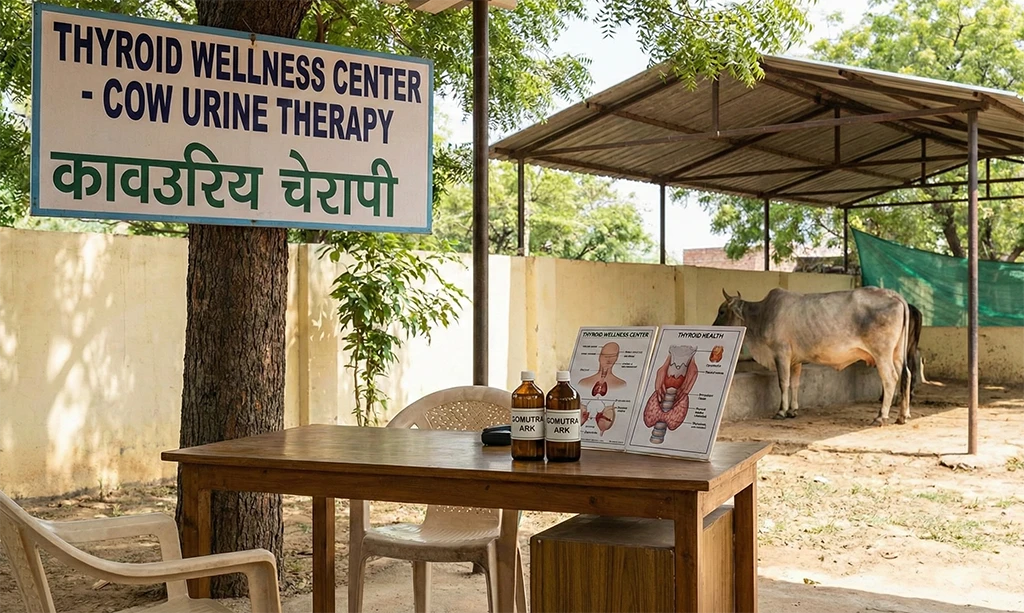
Cow urine alone is capable of regulating both Vata
and Kaphadoshas. In addition to water, cow urine contains 18 micronutrientssuch
as calcium, sulfur and iron. Regardless of its nature, any skin ailment is
ultimately caused by a deficiency of sulfur in the body. Conditions such as
psoriasis, eczema, knee pain, coughs, colds and tuberculosis can all be cured
through the consumption of cow urine, as it serves as a rich reservoir of
sulfur.
The human body contains a chemical compound known as
curcumin; a deficiency of this substance leads to the development of cancer.
When this deficiency occurs, the body's cells proliferate uncontrollably and
eventually manifest as tumors. Furthermore, cow urine proves beneficial in
addressing various kidney and urinary tract issues, such as hesitant urination
or the presence of blood in the urine.
Ash derived from dried cow-dung cakes proves to be
extremely beneficial for agriculture. Cow-dung manure enhances crop yields and
also helps preserve the natural nutritional elements found in vegetables,
fruits and grains. According to Ayurveda, cow dung possesses the capacity to
destroy the pathogens responsible for cholera and malaria. In Ayurvedic
medicine, cow urine is considered useful in the treatment of numerous incurable
diseases. It serves as a potent remedy for liver ailments. Cow urine has demonstrated
remarkable efficacy in the treatment of gastric disorders, skin diseases,
hemorrhoids, the common cold, joint pain and heart disease. Its systematic
consumption has also been observed to help reduce obesity and cholesterol
levels.
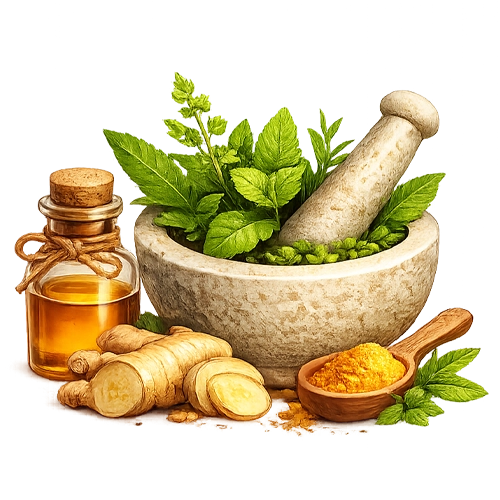
Panchagavya, a concoction prepared from cow's milk, curd, ghee, dung and urine, purifies the body, mind and soul. According to the Russian scientist Shirovich, cow's milk possesses the highest capacity to provide protection against radioactive radiation; furthermore, homes where the floors and walls are plastered with cow dung remain safe from such radiation, as harmful waves are unable to cause any damage. Cow's milk helps prevent heart disease. The milk of indigenous cow breeds contains no cholesterol, whereas buffalo milk is associated with an increased risk of heart disease and contributes to elevated cholesterol levels.
Benefits of Serving and Feeding Cows (Gau Seva)
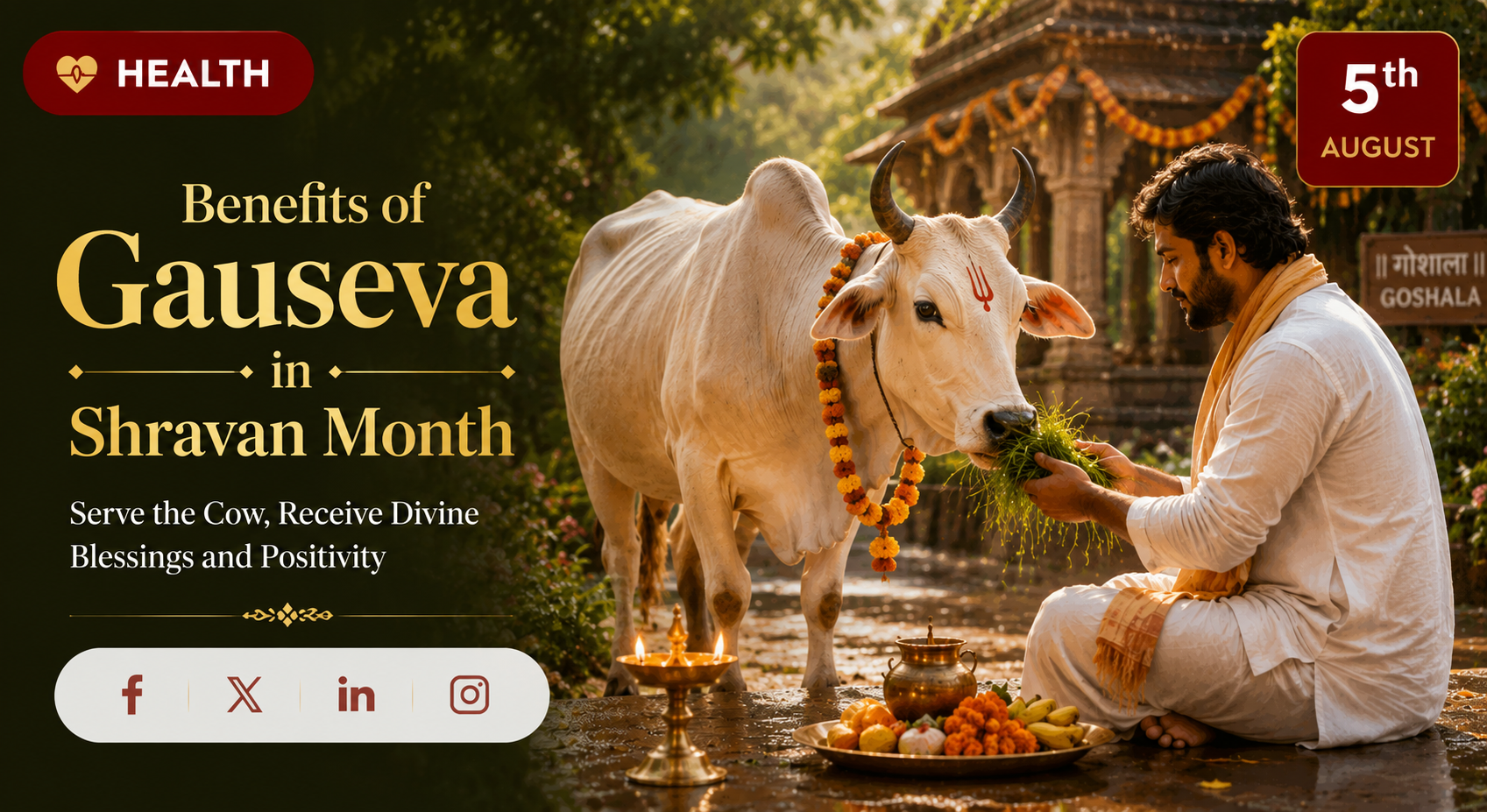
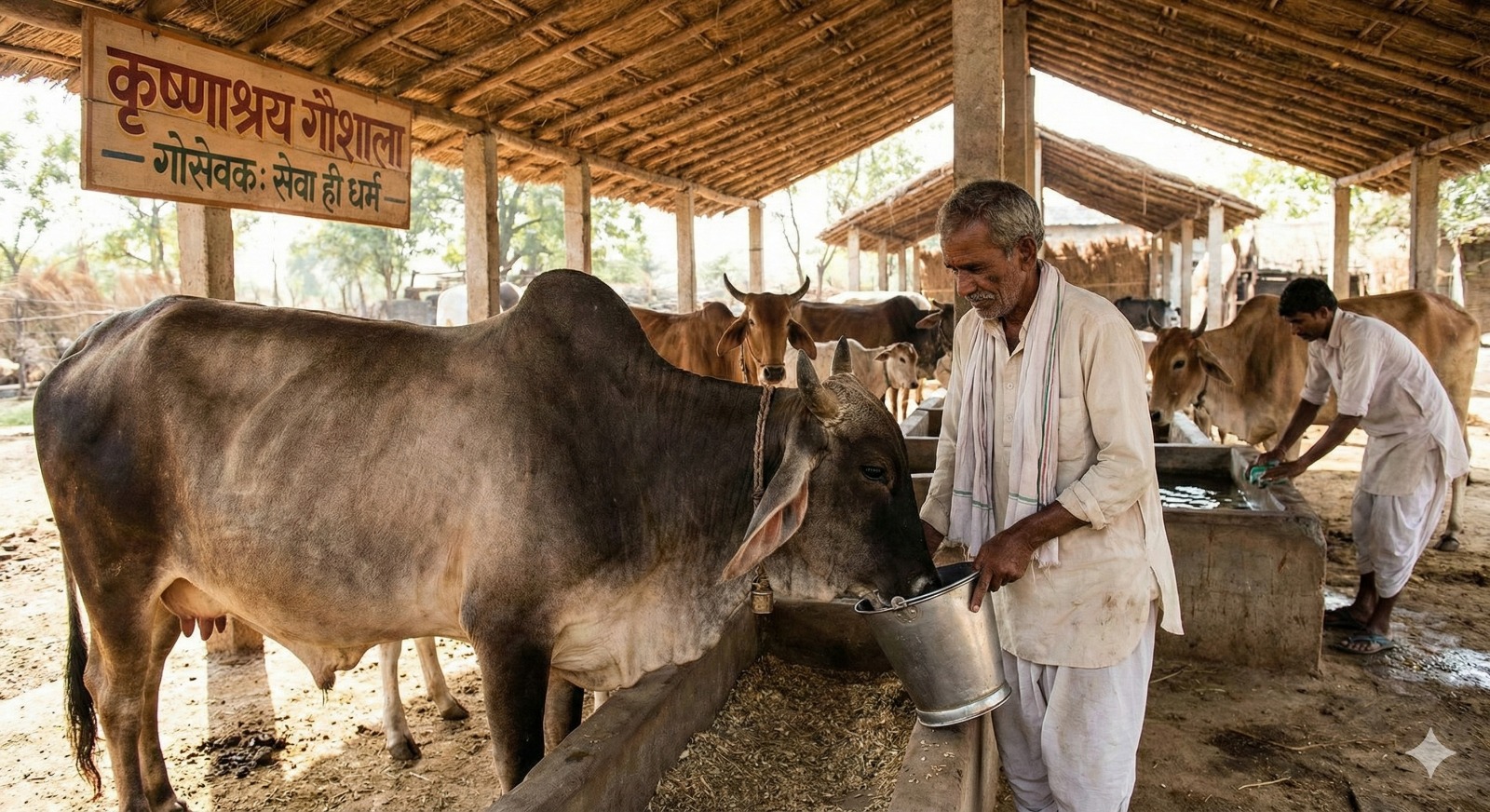
There are so many benefits of serving cows.For those who regularly
serve and worship the cow, happiness, prosperity and peace prevail in their
lives. Furthermore, it is believed that serving a cow can brighten an
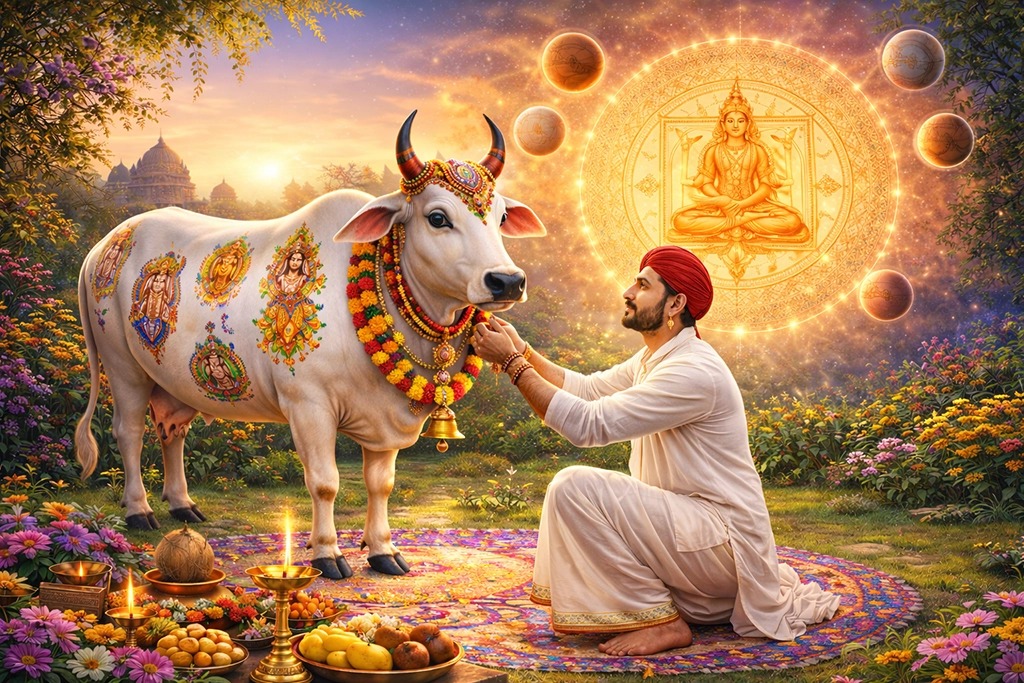
individual's fortune and strengthen the influence of the nine planets. Let us
explore how serving and feeding a cow can lead to happiness in life and bring
about peace regarding the nine planets. An individual who regularly worships
and serves a cow receives the blessings of all the deities. These blessings
enrich the individual's life with happiness and liberate them from all manner
of adversities. The cow is revered as Gaumatabecause she embodies the same
compassion and maternal affection as a mother. A person who cares for Gaumata
never experiences a lack of anything in life.
If one is afflicted by Pitru Dosha, it is considered
auspicious to regularly feed the cow roti, jaggery and fodder. Serving and
feeding a cow daily is a sacred act that fosters happiness in life and
strengthens the influence of the nine planets. This pious act has the power to
transform an individual's destiny and liberate them from all forms of
suffering. If you, too, desire happiness, prosperity and peace in your life,
resolve to regularly serve and feed a cow. overall cow and prosperity in Hinduism are deeply interconnected.
FAQs
What
does a cow represent spiritually?
Across spiritual
traditions and mythologies, the cow is a profound symbol of motherhood,
abundance, nourishment and selfless giving. Because of its gentle demeanor and
life-sustaining milk, the cow is universally recognized as an emblem of Mother
Earth, peace and grounded strength.
What
does the Bhagavad Gita say about cows?
The Sacredness of the
Holy Cow – Bhagavad Gita – Ch-10, Verse ...The Bhagavad Gita elevates the cow
to a sacred status, symbolizing purity, nourishment and abundance. Lord
Krishna, the central speaker of the text, emphasizes the divine nature of cows,
their necessity in human society and the spiritual merit of protecting them.
What
is the spiritual use of the cow?
The cow is considered
the universal form of all deities. Her dung and urine are not waste but divine
gifts that connect us to nature and spirituality.
What
God is represented by a cow?
Sanctity of the cow |
Hinduism, Religious Significance ...In Hinduism, the cow is believed to
represent all 330 million deities, as it is considered the earthly embodiment
of the divine and nourishing Mother Goddess. It is specifically associated with
the celestial, wish-granting cow Kamadhenu (or Surabhi) and the earthly
representation of fertility, Bhumi Devi (the Earth Goddess.
Why
are cows considered spiritually important in Hinduism?
Cows are considered spiritually important because
they symbolize purity, compassion, prosperity and divine energy in Hindu
culture.
How
does serving cows bring prosperity?
It is believed that serving and feeding cows brings
peace, positive energy, happiness and blessings into life.
What
is the spiritual significance of Gau Seva?
Gauseva is considered a sacred act that strengthens
compassion, spiritual growth and harmony between humans and nature.
Why
are cow products used in Hindu rituals?
Cow milk, ghee, dung and urine are used in Hindu
rituals because they are believed to purify the environment and enhance
spiritual energy.
What
are the Ayurvedic benefits of cow products?
According to Ayurveda, cow products support
immunity, digestion, skin health and natural healing practices.
Why
is the cow called Gaumata?
The cow is called Gaumata because she nourishes
humanity selflessly, much like a mother, through milk and other beneficial
products.
Leave A Comment

Scroll Down

Adopt A Cow
Give a Cow a Home
Choose how you'd like to help today

Donate
Make a Difference Today
Choose how you'd like to support our mission

Donate For Your Cause
Support specific items or services easily.

Monthly Donation
Choose a cause and support specific items or services easily with your donation today.

Simple Payment
Make a quick donation with a single payment—no need to select any specific items or services.

Donate via QR Code
Scan and pay instantly through any UPI app.

Direct Bank Transfer
Transfer directly to our bank account number.

Send Cheque
Submit details: amount, date, bank & cheque number.
Scan & Pay
Donate via QR Code
Scan this QR code using any UPI app like GPay, PhonePe, or Paytm.

Official UPI ID
krishnayan@iob



Bank Details
Direct Bank Transfer
Transfer directly to our bank account via IMPS, NEFT, or RTGS.
Click Login Button for Virtual Account Details
YES Bank (Standard)
Beneficiary Name
Shree Krishnayan Desi Gauraksha
Bank Name
YES Bank
Branch
Haridwar
Account Number
061094600000435
IFSC Code
YESB0000610
State Bank of India (International)
Beneficiary Name
Shree Krishnayan Desi Gauraksha
Bank Name
State Bank of India (FCRA Account)
Branch
Sansad Marg, Delhi
Account Number
39995747778
Swift Code
SBININBB104
Note: Foreign Donation (Only for non-Indian Passport holders).
Please share the payment screenshot/transaction ID on WhatsApp (+91 8755955000) to receive your donation receipt.
Cheque Details
Send Cheque
Please fill in the cheque details below to log your contribution.
Details Submitted!
Your cheque details have been registered. Please send the physical cheque to the following address:
Mailing Address:
SHREE KRISHNAYAN DESI GAURAKSHA
Near Prem Vihar Chowk, Haripur Kalan,
Haridwar Uttrakhand- pin 249410
Mobil- 7830241288
0 Comments